
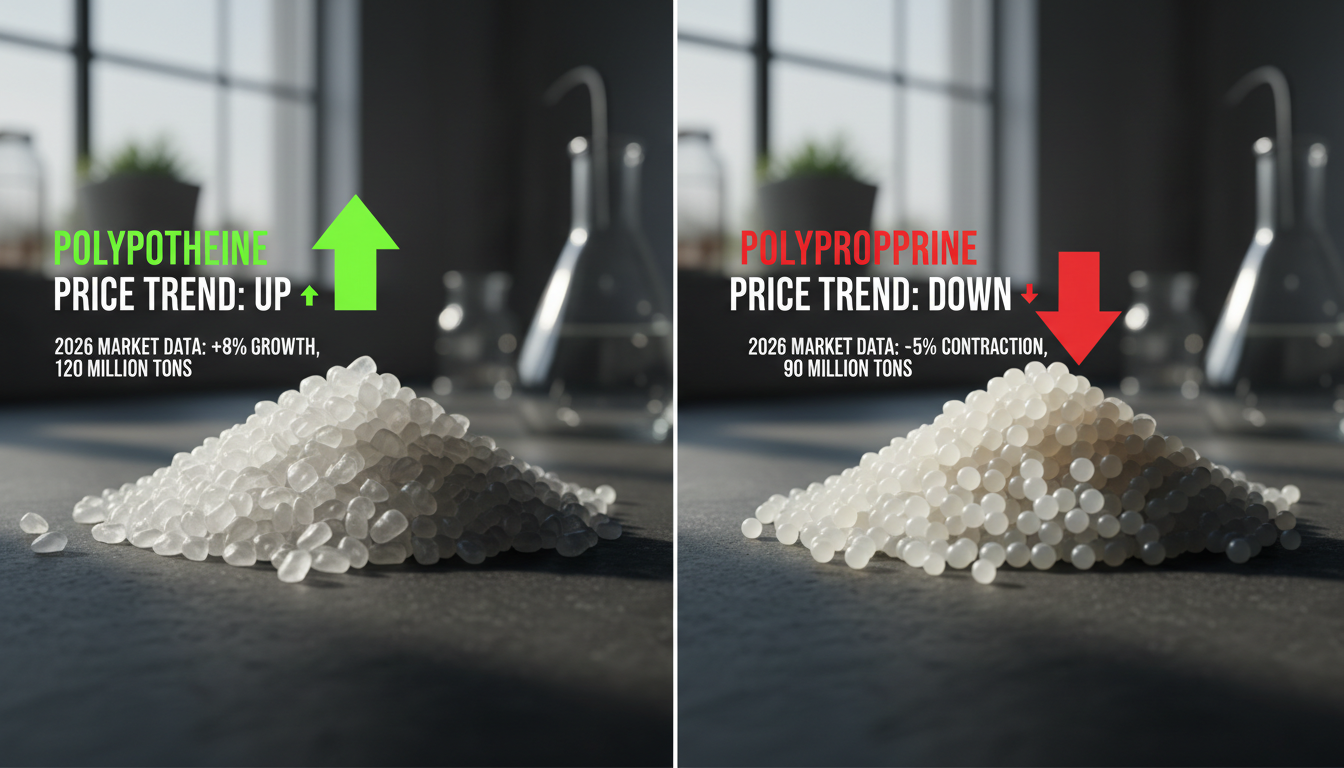
If you’re in manufacturing, packaging, or any industry that relies on plastic resins, you’ve probably noticed that polyethylene and polypropylene prices can feel like a roller coaster. One month you’re celebrating lower costs, the next you’re scrambling to adjust budgets as prices climb.
We’ve been tracking the resin market closely, and 2026 has already brought some interesting changes. Both PE and PP markets are showing patterns that buyers need to understand—especially if you’re planning contracts or large purchases in the coming months.
Current State of Polyethylene Resin Prices
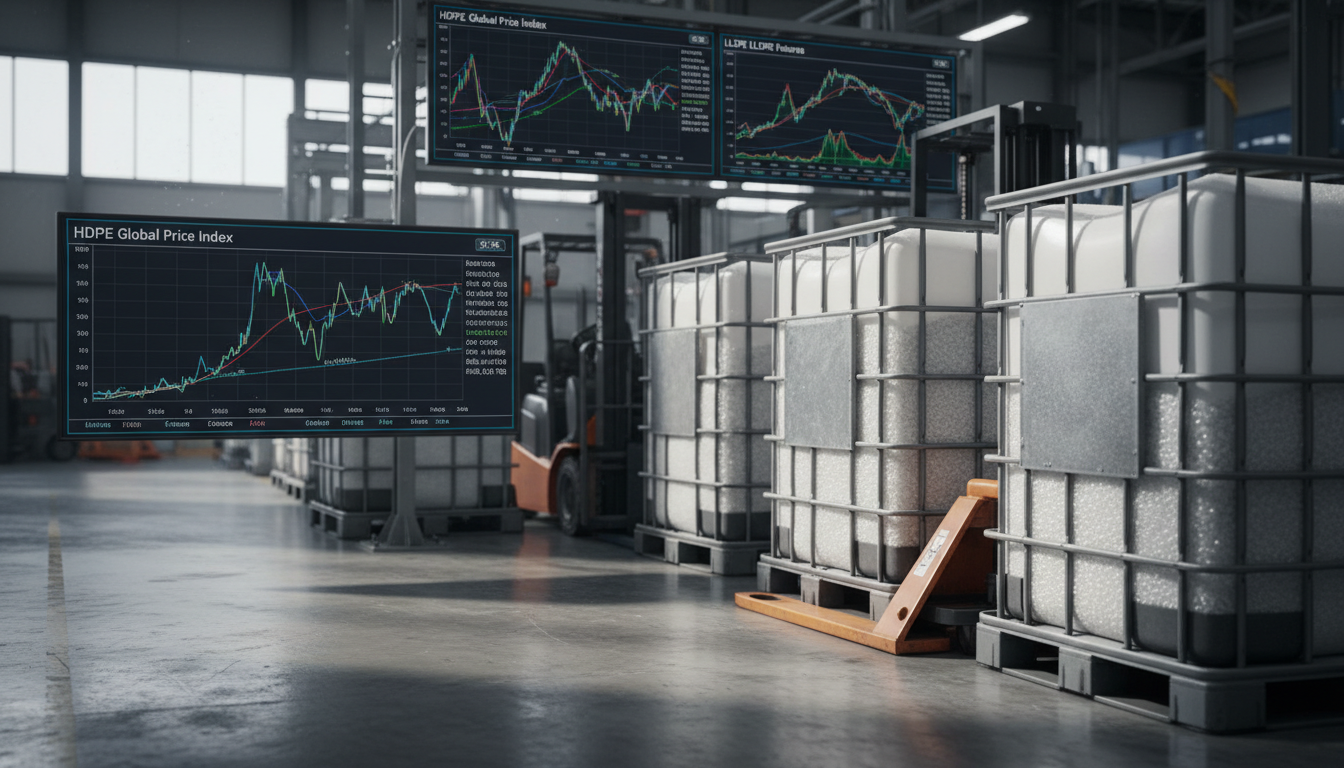
Polyethylene fell to 6,750 CNY/T on February 10, 2026, down 0.13% from the previous day.[1] But here’s what’s more telling: over the past month, Polyethylene’s price has risen 3.73%, but it is still 15.32% lower than a year ago.[1]
What does this mean for your purchasing strategy? The market’s recovering from late 2025 lows, but we’re nowhere near the peaks from previous years. Spot prices were said to be as much as 8-10¢/lb below contract prices, as buyers fulfilled more of their 2026 resin needs with the spot market.[6]
The PE market right now is basically a buyer’s playground. The overall industry sentiment is that for now, as 2026 contracts are negotiated, it is mostly a buyer’s market for all five commodity resins due to the continued imbalance between supply/demand fundamentals.[6] If you’re negotiating contracts, this is your window.
For those looking for reliable PE resin suppliers, we’ve seen increased competition among producers trying to maintain market share, which typically benefits buyers through better pricing and terms.
Polypropylene Resin Price Dynamics
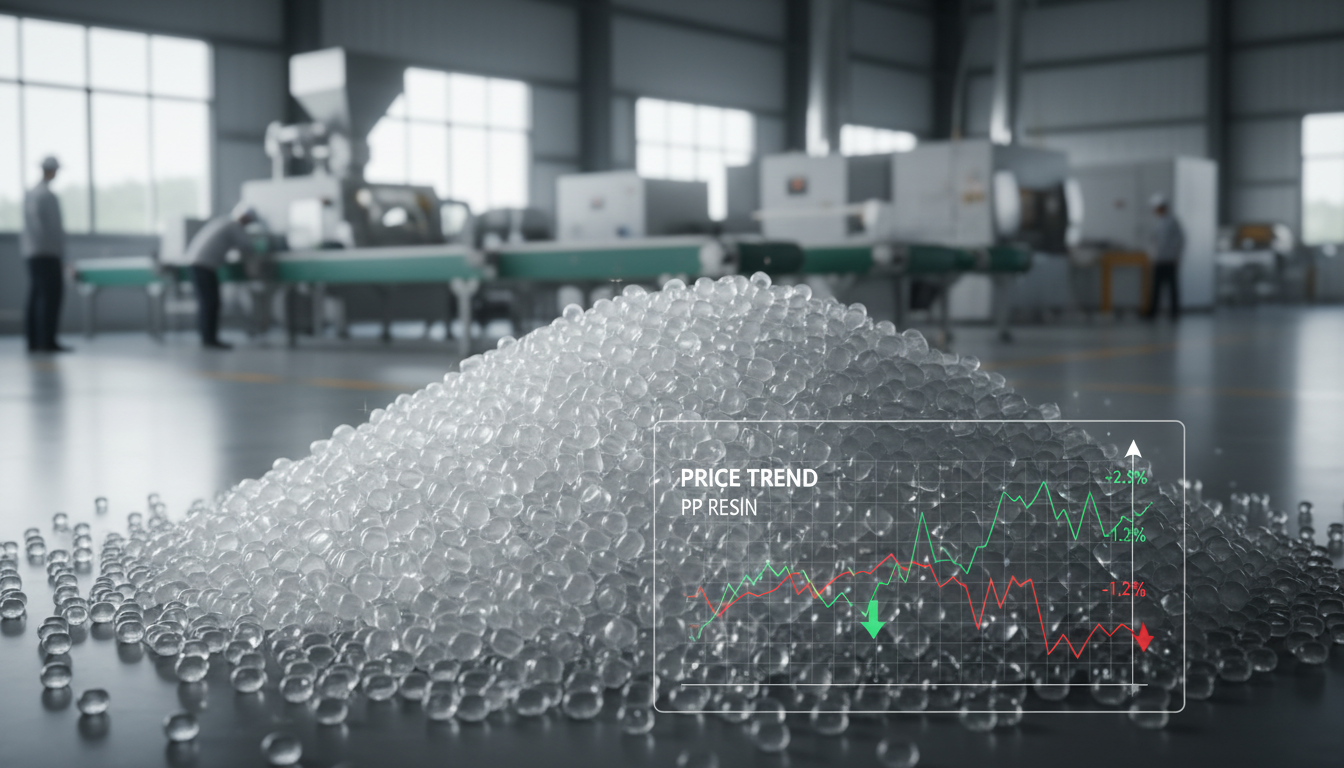
PP’s story is similar but with its own twists. Over the past month, Polypropylene’s price has risen 4.54%, but it is still 9.50% lower than a year ago.[3] That slight monthly increase? It’s mostly tied to feedstock costs rather than demand surging.
Polypropylene Prices January 2026: Northeast Asia up at USD 1.0/kg, Europe up at USD 1.59/kg, India up at USD 1.13/kg.[8] Regional variations matter here—where you’re buying makes a real difference in what you’ll pay.
The polypropylene market has been particularly interesting because producers tried to push increases early in 2026. Spot levels ticked higher, as predicted by the PlasticsExchange, with half-cent gains recorded across all polyethylene (PE) and polypropylene (PP) grades.[1] But buyer resistance has kept those increases modest.
Key Factors Driving Resin Prices in 2026
Several forces are pushing and pulling at PE and PP prices right now. Let’s break them down:
Feedstock Costs: Oil prices will lead PE prices now and into next year.[6] When crude oil stays steady in the low-to-mid $60s range, resin prices tend to flatten out. Polypropylene follows propylene monomer costs closely—when monomer drops, PP usually follows within weeks.
Supply-Demand Imbalance: Here’s the big one. Despite suppliers reducing plant operating rates to the low 80s, in percentage terms, the market continues to be oversupplied.[6] Too much resin chasing too little demand creates downward price pressure.
Global Competition: Global market conditions rather than demand have forced suppliers to “push” resin exports with lower pricing.[6] When producers can’t sell domestically, they flood export markets, which eventually pressures prices everywhere.
Tariffs and Trade: Import duties, especially on PET, have created ripple effects across all resin markets. While tariffs can protect domestic producers, they also create pricing uncertainty that makes planning harder.
Spot vs Contract Pricing: What’s the Difference?
This is where things get tactical. Spot prices are what you pay for immediate delivery—think of them as the “right now” price. Contract prices are negotiated agreements for future deliveries at predetermined rates.
Domestic Prime asking prices generally reflect the $0.05 to 0.07/lb contract increases on the table for January, which are meeting some resistance. In the meantime, spot prices are being successfully walked higher.[1]
The spread between spot and contract can tell you a lot about market conditions. When spot prices run significantly below contract (like they did in late 2025), it signals oversupply and gives buyers leverage to renegotiate or buy spot instead.
Regional Price Variations You Should Know
Geography matters more than you might think. In Europe, polypropylene prices registered a sharper decline as weaker demand from automotive, construction, and packaging industries added downward pressure. The keyword price index trended lower due to abundant inventories and subdued offtake from processors. Falling feedstock costs, alongside competitive imports from Asia, exacerbated bearish sentiment.[8]
Compare that to Asia, where China’s PP and PE markets maintained a cautiously firm tone in the week ending January 30, as prices selectively extended earlier gains. Players noted that the initial recovery had already taken shape from late December to early or mid-January.[9]
If you’re sourcing internationally or comparing suppliers across regions, these variations can represent real savings—or unexpected costs if you’re not paying attention.
Smart Buying Strategies for 2026
Based on current market conditions, here’s what we’re recommending to clients:
Take Advantage of Buyer’s Market: With supply exceeding demand, you have negotiating power you might not have had in years. Don’t be shy about pushing for better terms or exploring spot purchases when they’re advantageous.
Monitor Feedstock Prices: Set up alerts for crude oil and propylene prices. These lead indicators can give you a 2-4 week heads-up on resin price movements.
Diversify Your Supply Chain: Don’t put all your eggs in one basket. Having relationships with multiple suppliers—including different regions—gives you flexibility when prices shift or supply tightens.
Consider Timing: The full impact of the duties is not expected to be seen until early in the first quarter of 2026.[6] Policy changes take time to work through the supply chain. Plan purchases around these transition periods when possible.
Looking at alternatives? We also work with PET resin and other materials that might fit your applications. Sometimes a material switch can save significant costs.
What to Expect for the Rest of 2026
Crystal balls don’t exist, but market indicators can help us make educated guesses. Will 2026 bring some stability to the resin markets after a tumultuous 2025?[7] That’s the question everyone’s asking.
Most analysts expect continued flat-to-modest pricing for PE and PP through Q2 2026, barring major disruptions. Steady oil prices in the low/mid-$60s will keep global prices flat.[6] Weather events, geopolitical issues, or unexpected plant shutdowns could change that quickly though.
The supply-demand imbalance will likely persist through at least mid-year. Plant operating rates would need to drop significantly—or demand would need to surge—to tighten the market enough for sustained price increases.
For comprehensive material options, check out our full range including ABS and EVA resins.
Conclusion
Polyethylene resin price trends and polypropylene resin markets in 2026 are presenting opportunities we haven’t seen in years. With prices down year-over-year, supply exceeding demand, and producers competing for market share, buyers have real leverage.
The key is staying informed and acting strategically. Watch feedstock prices, understand the spot-contract dynamics, and don’t be afraid to negotiate aggressively. The buyer’s market won’t last forever—supply will eventually tighten or demand will recover—but for now, conditions favor those who need to purchase.
Keep monitoring monthly price reports, maintain relationships with multiple suppliers, and factor in regional variations when planning purchases. The resin market can shift quickly, but understanding these fundamentals will help you navigate whatever comes next.
FAQs
What’s causing polyethylene resin prices to be lower in 2026 compared to last year?
The main drivers are oversupply and weak demand. Producers have been running plants at reduced capacity (around 80-85%), but supply still exceeds what buyers need. Global competition and strong export activity are keeping pressure on domestic prices. Oil prices staying steady in the $60s range also helps keep PE costs moderate.
Is polypropylene resin more expensive than polyethylene right now?
It depends on grade and region, but generally PP and PE prices have been moving together in 2026. PP saw a 4.54% monthly increase versus PE’s 3.73% as of early February, mainly because PP tracks propylene monomer costs which increased slightly. Both are still down significantly (9-15%) compared to a year ago, making both relatively affordable historically.
Should I buy resin on the spot market or lock in contracts?
Right now, spot markets are offering opportunities because prices have been running 8-10¢/lb below contract in some cases. If you have storage and can handle logistics, spot buying makes sense for near-term needs. For long-term security and budget certainty, negotiate contracts aggressively—you have leverage in this buyer’s market to get favorable terms.
How do oil prices affect polyethylene and polypropylene resin costs?
Oil prices drive PE directly because ethylene (PE’s building block) comes from crude oil derivatives. When oil stays stable or drops, PE costs follow within weeks. PP is slightly less directly tied to oil because it comes from propylene, which can be produced from oil or natural gas. Both resins ultimately track energy costs though—sustained oil price changes of $10-15 per barrel typically translate to resin price movements.
What industries use the most polyethylene and polypropylene resin?
PE dominates in packaging (bottles, bags, films), construction (pipes, insulation), and consumer goods. It’s the world’s most widely used plastic. PP’s biggest markets are automotive parts, packaging (especially food containers and closures), textiles (carpets and upholstery), and medical devices. Both resins are incredibly versatile, which is why their price movements matter across so many industries.