
When you walk down a grocery store aisle, nearly every product you pick up contains one of two plastics: PE and PET are plastics that you can find almost anywhere, from grocery stores to industrial plants. But here’s the thing—while these materials might seem similar at first glance, they’re actually quite different in how they’re made, what they can do, and where they’re best used. Whether you’re in packaging, manufacturing, or just trying to make smarter choices about the materials you use, knowing the difference between pet pe material can save you time, money, and headaches.
So what makes PET and PE so different? The answer lies in their chemical makeup, physical traits, and real-world performance. We’re going to break down everything from their molecular structures to their applications, giving you a clear picture of when to use which plastic. Let’s get into it.
What is PET Plastic?
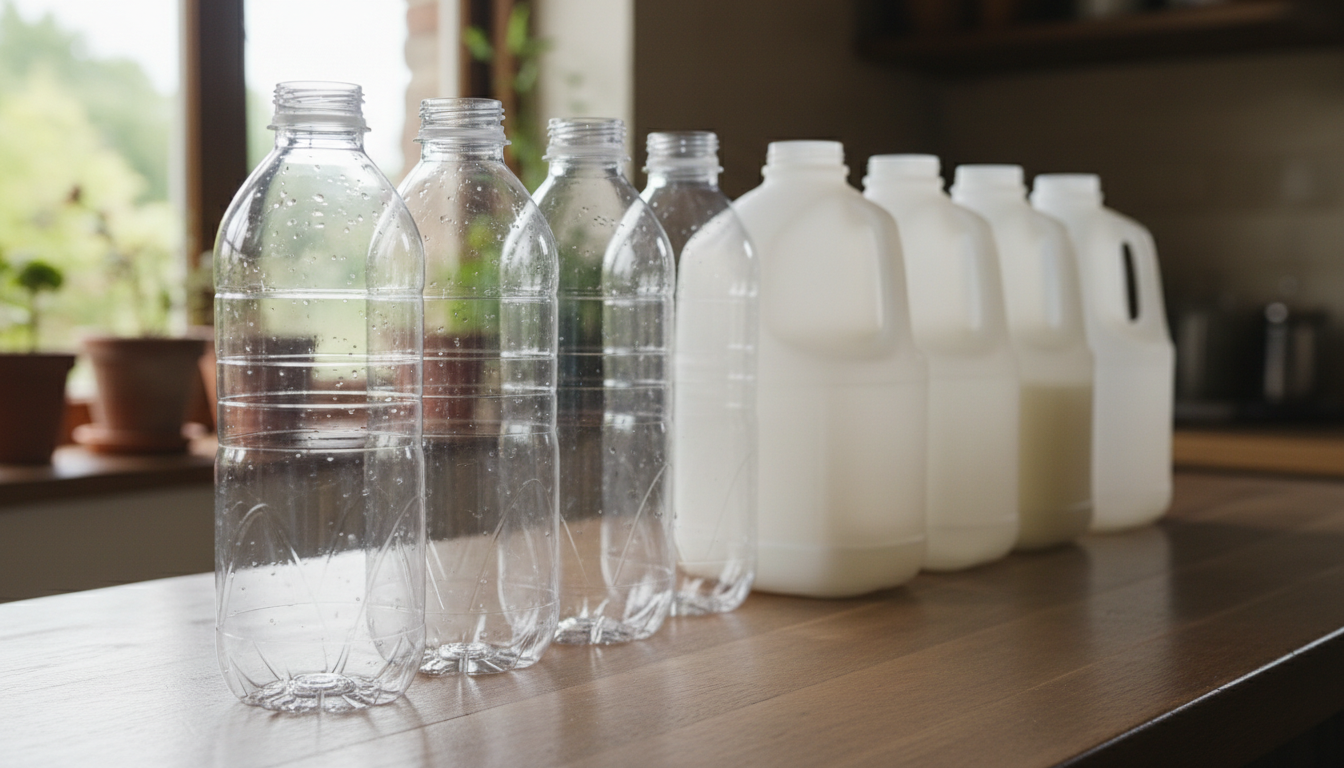
Polyethylene terephthalate (PET) is the most common thermoplastic polymer resin of the polyester family and is used in fibres for clothing, containers for liquids and foods, and thermoforming for manufacturing. You’ve probably seen PET bottles everywhere—from water bottles to soda containers. That’s because PET has some unique traits that make it perfect for these uses.
PET is a polymer made from ethylene glycol and terephthalic acid. The chemical formula for PET is (C10H8O4)n, representing a repeating chain of monomers with carbon, hydrogen, and oxygen atoms. This structure is what gives PET its distinctive properties. PET is a sturdy, lightweight plastic that has a high strength-to-weight ratio, which is one of the reasons why it’s such a versatile and affordable material.
One of the biggest selling points of PET is its clarity. PET is one of the most transparent plastics, making it suitable for water bottles and other types of clear packaging. It’s also got excellent barrier properties, especially when it comes to keeping gases out. PET has lower gas permeability compared to PE, so it’s better at keeping oxygen and carbon dioxide out, helping extend the shelf life of products with PET packaging. This makes it the go-to choice for carbonated beverages where you need to keep that fizz locked in.
Beyond bottles, PET shows up in all sorts of places. PET can be food packaging, polyester fibers, bottles, and microwavable containers. When used in textiles, it’s actually what we call polyester. The material is also highly recyclable, and recycled PET (rPET) can be turned into everything from new bottles to clothing fibers. We’ll get deeper into the brand’s PET products later, but for now, just know that this plastic is a real workhorse in the packaging world.
What is PE Plastic?
Now let’s talk about polyethylene, or PE. The polymer PE is a repeating chain of ethylene molecules. PE’s chemical structure consists of carbon atoms and hydrogen atoms, and PE has the chemical formula (C2H4)n. It’s a much simpler structure than PET, which gives PE some very different characteristics.
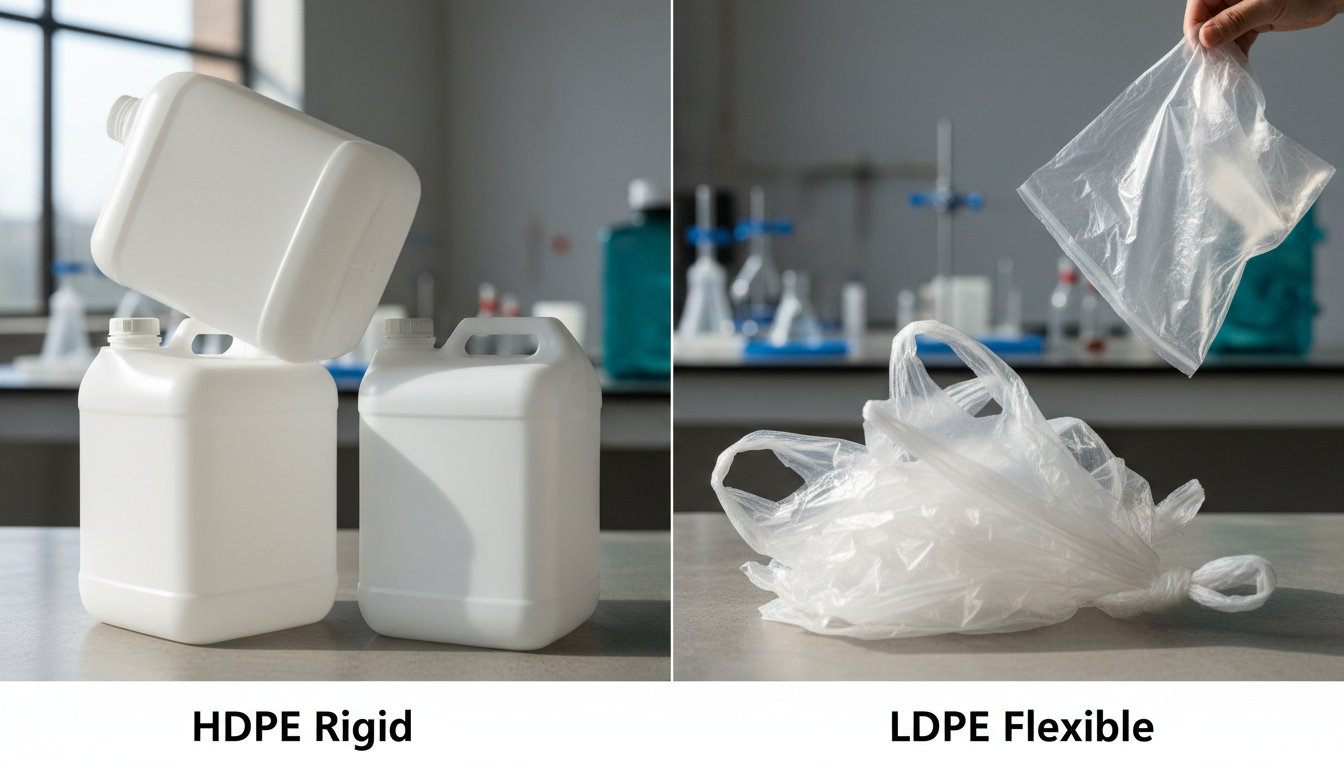
Here’s where things get interesting: PE isn’t just one material. It comes in several forms, each with its own properties. PE has mechanical properties that vary depending on its different forms, such as high-density polyethylene (HDPE) and low-density polyethylene (LDPE). HDPE is a durable, rigid material, while LDPE is soft and stretches more easily. Think of HDPE as the tough guy—you’ll find it in milk jugs, detergent bottles, and pipes. LDPE, on the other hand, is the flexible one, used in plastic bags, squeeze bottles, and films.
PE is everywhere. PE applications depend on the density of the plastic, but common uses are storage containers, plastic bags, drink bottles, and household items. It’s also used extensively in the construction industry, from vapor barriers to insulation materials. For those looking to source quality PE materials, understanding these density variations is key to getting the right product for your application.
One of PE’s standout features is its chemical resistance. It can handle exposure to most acids, bases, and solvents without breaking down. It’s also moisture-resistant and has excellent electrical insulation properties, which is why you’ll see it used in cable insulation and electrical components.
PE vs. PET: How Are They Different?
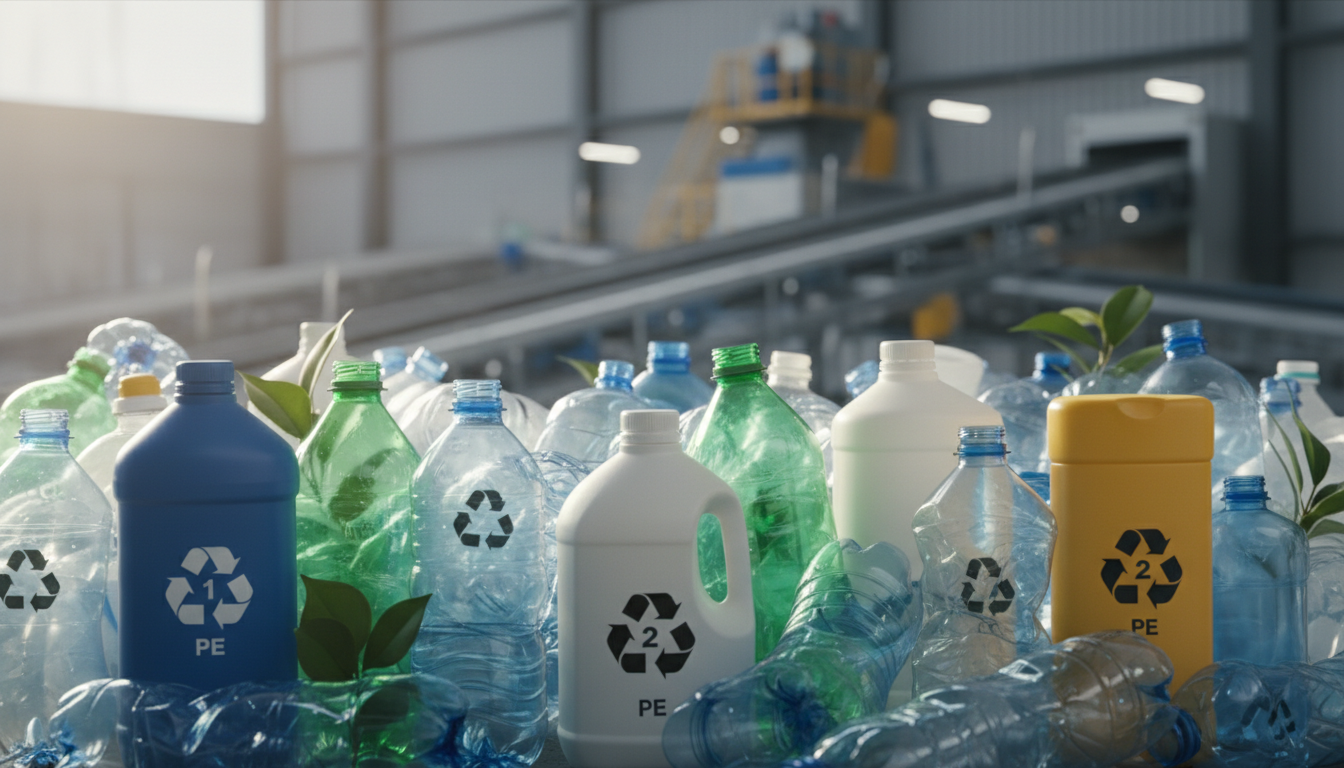
Now that we’ve covered what each plastic is, let’s talk about how pet and pe actually stack up against each other. These differences matter because they determine which material works best for your specific needs.
Chemical Composition
PE is made from repeating chains of ethylene molecules, consisting of carbon and hydrogen atoms with the formula (C2H4)n. PET is composed of ethylene glycol and terephthalic acid, with a chemical formula of (C10H8O4)n, including carbon, hydrogen, and oxygen atoms. That oxygen in PET’s structure? It’s what gives PET its ester linkages and polyester classification. PE, being just carbon and hydrogen, is a much simpler hydrocarbon polymer.
Strength and Mechanical Properties
PE varies in mechanical properties depending on its form. High-density polyethylene (HDPE) is durable and rigid, while low-density polyethylene (LDPE) is softer and more flexible. PET is known for being sturdy and lightweight, with a high strength-to-weight ratio, making it a versatile and cost-effective material. In general, PET tends to be stiffer and stronger than most PE grades, though HDPE can give it a run for its money in terms of rigidity.
Transparency and Clarity
PET is one of the most transparent plastics, making it suitable for water bottles and other types of clear packaging. PE ranges from opaque to transparent, depending on the density of the polymer. If you need crystal-clear packaging that showcases your product, PET is usually the better choice. PE, especially HDPE, tends to be milky or opaque, though LDPE can be somewhat translucent.
Barrier Properties
PET has lower gas permeability compared to PE, so it’s better at keeping oxygen and carbon dioxide out, helping extend the shelf life of products with PET packaging. This is why you’ll see carbonated drinks in PET bottles but rarely in PE bottles. PE, while being a good moisture barrier, allows more gas to pass through, which can be a dealbreaker for certain applications.
Recyclability
PE and PET are both easy to recycle, but PET retains its original properties better than PE, even when it goes through recycling many times. Both plastics are widely recycled, but PET has a slight edge in terms of how well it holds up through multiple recycling cycles. Recycled PET is versatile, becoming new products like clothing, drink bottles, or car parts, and using the recycled material is better for the environment than producing new PET.
Cost
PET and PE are both inexpensive plastics with similar prices, but PE plastics can cost more. In most cases, both materials are budget-friendly, though prices can fluctuate based on resin markets and specific grades.
Applications of PET and PE
Knowing where each plastic shines helps you pick the right one for your project. Let’s look at some typical uses for each.
PET Applications:
- Beverage bottles (water, soda, juice)
- Food containers and trays
- Microwavable containers
- Polyester clothing and textiles
- Pharmaceutical packaging
- Cosmetic containers
PE Applications:
- Plastic bags (grocery, trash, shopping)
- Milk jugs and detergent bottles
- Pipes and tubing
- Films and wraps
- Toys and household goods
- Agricultural film
- Cable insulation
PE and PET have many shared applications, but in some cases, one plastic is a better choice than the other. For example, if you need a container for carbonated beverages, PET wins hands down. But if you need flexible film for wrapping or a durable pipe for water distribution, PE is your material. For businesses looking to source various plastic materials, companies like CBRHK Global offer a range of options including PP, PC, and other polymer solutions.
Sustainability and Environmental Impact
PE and PET have high sustainability potential with the right recycling practices. But let’s be real—both materials have environmental challenges. Certain manufacturing processes for PE and PET can hurt the environment, and most of the material goes into landfills or oceans instead of recycling facilities.
The good news? Both plastics are recyclable. One of the reasons PE and PET are so widespread is that they’re both very easy to recycle, and companies can use the recycled material to produce more plastic products. Since the primary use of PET is for plastic drink bottles, sorting and recycling the plastic usually takes less work than for other plastics.
However, there’s a catch. PE and PET are resistant to breaking down in the environment, emphasizing the importance of continuing recycling efforts for these plastics. A study found that PE only partially degrades even when sitting in moist soil for 12 to 32 years. Since PE and PET lack efficient biodegradability, and most companies and consumers don’t recycle the plastics, landfills are overflowing with them.
The key takeaway? We need to do better with recycling. If you’re in the supply chain or manufacturing, choosing recycled grades and supporting circular economy practices can make a real difference.
Processing and Manufacturing
Both pet pe material can be processed using similar techniques, but they have different sweet spots. PET is commonly processed through injection molding for preforms (which are then blow-molded into bottles), sheet extrusion for packaging films, and fiber spinning for textiles. It requires higher processing temperatures than PE.
PE is incredibly versatile in terms of processing. It can be blow molded, injection molded, extruded into films and sheets, and even rotationally molded for large hollow objects. HDPE is manufactured at low temperatures (70-300°C) and pressure (10-80 bar). This lower processing temperature can translate to energy savings in manufacturing.
Both materials require proper drying before processing, especially PET, which is hygroscopic and can absorb moisture from the air. Moisture can cause quality issues during processing, so proper material handling is essential for both plastics.
Which Material Should You Choose?
So, pet and pe—which one do you go with? It really depends on what you’re making and what properties matter most to you.
Choose PET if you need:
- Crystal-clear transparency
- Superior gas barrier properties
- High strength-to-weight ratio
- Better recyclability over multiple cycles
- Containers for carbonated beverages
Choose PE if you need:
- Flexibility and impact resistance
- Chemical resistance to acids and bases
- Lower processing temperatures
- Moisture barriers
- Cost-effective films and bags
- Pipes and structural applications
PE’s diverse forms and flexibility make it ideal for items ranging from food wraps to automotive fuel tanks, while PET’s strength, transparency, and excellent barrier properties are perfect for beverage bottles and food packaging.
FAQs
What’s the main difference between PET and PE plastic?
The main difference is their chemical structure—PET contains oxygen atoms and is a polyester, while PE is a simple hydrocarbon polymer. This gives them different properties: PET is clearer and has better gas barrier properties, while PE is more flexible and comes in various densities with different characteristics.
Is PET or PE better for the environment?
Both materials are recyclable, but PET generally retains its properties better through multiple recycling cycles. However, both contribute to plastic pollution when not properly recycled. The environmental impact depends more on recycling infrastructure and consumer behavior than the material itself.
Can you use PE instead of PET for beverage bottles?
While you can technically use PE for some beverage bottles, PET is preferred for carbonated drinks because of its superior gas barrier properties. PE allows more carbon dioxide to escape, which would cause carbonated beverages to go flat faster.
Which is stronger, PET or PE?
PET generally has higher tensile strength and stiffness than most PE grades. However, HDPE can be quite rigid and durable. The “strength” you need depends on your application—PET excels in rigidity and clarity, while PE offers better impact resistance and flexibility.
Are PET and PE food safe?
Yes, both PET and PE are approved by the FDA and other regulatory agencies for food contact applications. They’re both considered safe, non-toxic, and suitable for food packaging when produced to food-grade standards. PE is particularly good for direct food contact due to its chemical inertness.