

We’ve seen countless materials come and go in the plastics industry, but high impact polystyrene resin continues to hold its ground as one of the most reliable options out there. If you’re looking for a material that balances strength, affordability, and versatility, HIPS might be exactly what you need.
High impact polystyrene resin, commonly called HIPS, is a modified thermoplastic that’s been engineered to withstand impact better than standard polystyrene. The thermoplastic is derived from standard polystyrene that has been structurally modified with rubber to improve its mechanical performance, typically with rubber particles in a 5-10% ratio. This modification changes everything—what was once a brittle plastic becomes tough enough to handle daily wear and tear. We see HIPS used across industries from food packaging to automotive parts, and there’s a good reason manufacturers keep coming back to it.
What Makes HIPS Resin Different

Here’s the thing about high impact polystyrene resin: Polystyrene (PS) is a rigid, brittle thermoplastic, while high impact polystyrene (HIPS) is modified with rubber to enhance its toughness and impact resistance. That rubber addition creates a dual-phase structure that absorbs shock without cracking. Think of it like adding cushioning to a hard surface—the base stays rigid, but the rubber particles act as tiny shock absorbers throughout the material.
The physical properties tell the story. The density of the HIPS plastic remains around 1.04 g/cm³, making it lightweight enough to keep shipping costs down but sturdy enough to protect products. We particularly appreciate its dimensional stability—HIPS plastic has excellent dimensional stability, meaning it retains its size and shape even when exposed to temperature and humidity changes.
Common Applications of High Impact Polystyrene Resin
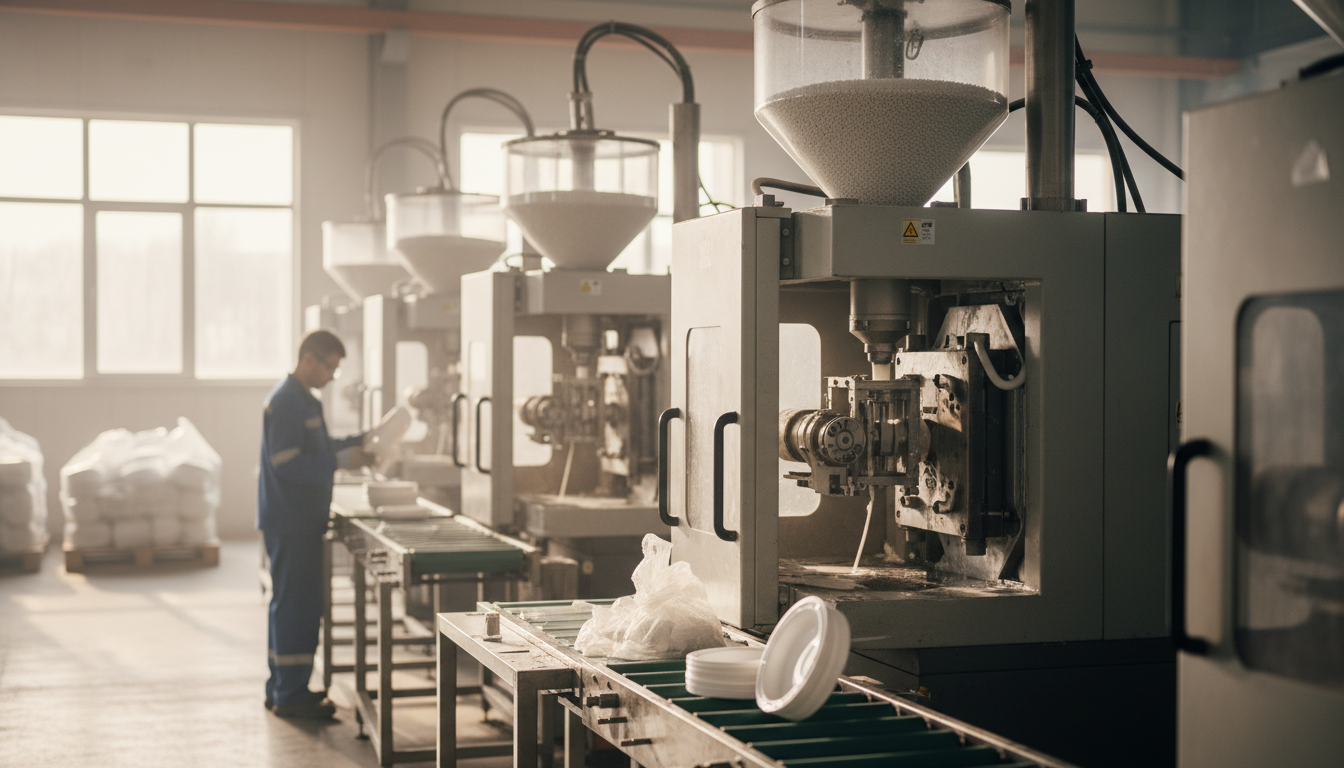
One of the most common uses for HIPS plastics is in food packaging, particularly for items such as yogurt cups, disposable utensils, and take-out containers. The material works well here because HIPS sheet is available in FDA compliant grades, giving manufacturers peace of mind for food-contact applications.
But food packaging is just the beginning. HIPS is used in the manufacturing of various automotive components such as interior trim parts, instrument panels, and exterior body parts because of its toughness and ease of processing. HIPS plastic material finds application in several fields, such as automotive components, toys, electronic casings, kitchenware, and more.
We also see HIPS making a big impact in retail and advertising. HIPS is ideal for custom signage, kiosks, and display units due to its printable surface and clean appearance. It accepts various printing methods including screen printing and digital printing, which makes branding and customization straightforward.
For those interested in exploring other plastic materials, check out our PP product line and PE options, which complement HIPS in different applications. We also offer ABS and EVA materials for specialized needs.
Key Benefits That Matter
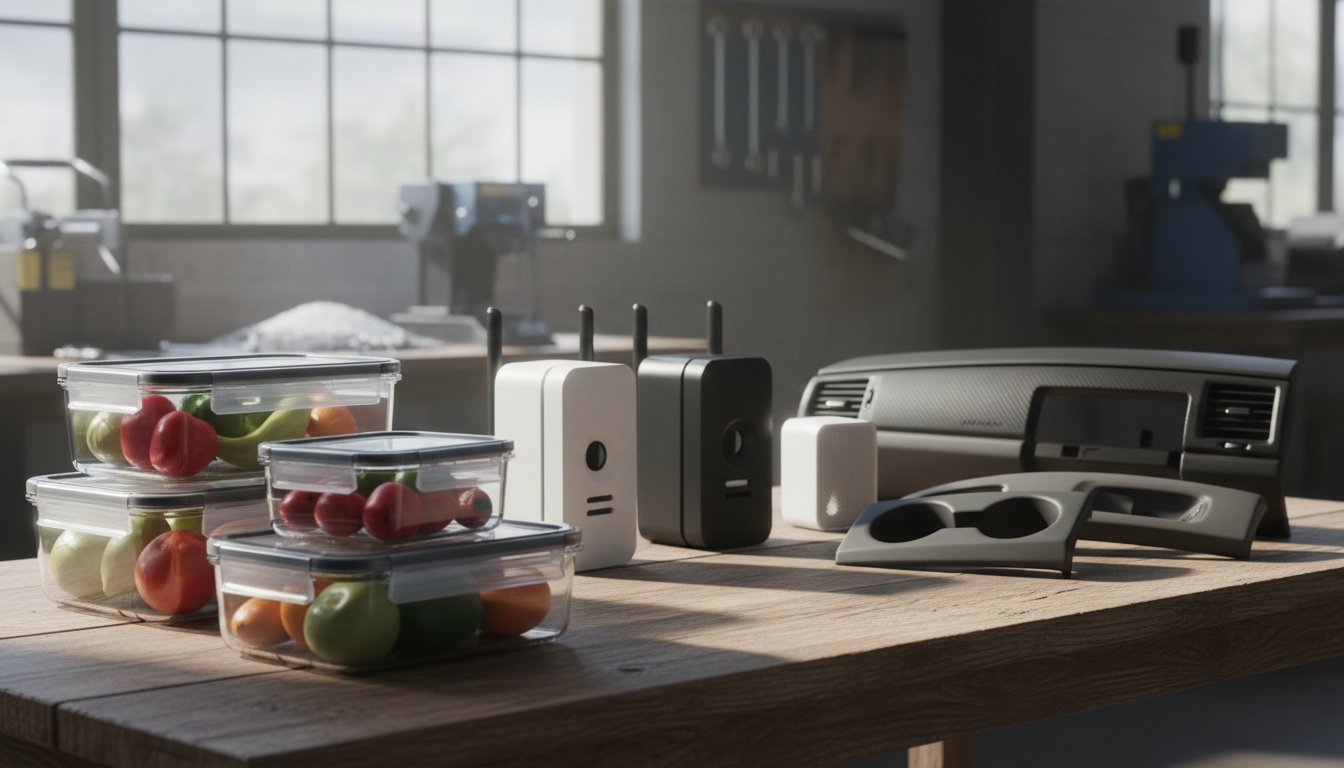
HIPS plastic is relatively inexpensive compared to other engineering plastics, making it a cost-effective option for manufacturers. When you’re producing thousands or millions of parts, that price difference adds up fast.
The processing advantages are real. HIPS is easy to process using various techniques such as extrusion, injection molding, and thermoforming. Lower melting points mean less energy consumption during manufacturing. And it can be thermoformed, machined, and cut with minimal effort, which helps reduce processing time and costs.
There’s also the sustainability angle. HIPS is fully recyclable, and the recycling process allows for minimal loss of its desirable properties, which means recycled HIPS maintains its performance characteristics for new products.
Limitations to Keep in Mind
Look, we’re not going to pretend HIPS is perfect for every situation. One of the main drawbacks of HIPS plastic is its limited thermal resistance, making it unsuitable for applications involving high temperatures. If your product will face extreme heat, you’ll want to consider alternatives.
HIPS plastic is not recommended for outdoor use since it is susceptible to degradation due to UV radiation exposure. Direct sunlight breaks down the material over time unless you add UV-resistant coatings or stabilizers. It has lower chemical resistance than plastics like ABS or polypropylene, making it less ideal for applications where it will encounter harsh chemicals.
These aren’t dealbreakers—they’re just factors to consider during material selection. For many indoor applications, these limitations don’t come into play at all.
Processing and Manufacturing Considerations
The manufacturing process for High Impact Polystyrene (HIPS) involves polymerization of styrene monomers using a catalyst such as benzoyl peroxide, followed by mixing the resulting polymer with additives such as impact modifiers, stabilizers, and pigments. From there, the HIPS resin is then extruded or injection molded into the desired shape and size.
For manufacturers, the material’s workability is a major selling point. High impact polystyrene can be assembled with mechanical fasteners, solvents, or adhesives, giving you flexibility in how you construct final products. HIPS plastic offers a smooth surface for printing logos, text, and graphics, which simplifies branding and product identification.
Making the Right Choice
So when should you choose high impact polystyrene resin? If you need a material that’s affordable, easy to process, and tough enough to handle normal impact, HIPS fits the bill. It works particularly well for high-volume production runs where cost control matters.
Assessing your specific needs is essential when considering HIPS plastic for your project. Consider the operating environment, required durability, and production volumes. For many applications—especially those involving packaging, displays, consumer goods, and interior components—high impact polystyrene resin delivers the performance you need without breaking the budget.
We’ve helped countless manufacturers find the right plastic materials for their specific needs. If you’re exploring options for your next project, visit our main site to learn more about our full range of polymer solutions. You can also explore our detailed guide on high impact polystyrene properties and benefits for additional technical information.
Conclusion
High impact polystyrene resin offers a practical balance of properties that make it valuable across multiple industries. Its combination of impact resistance, ease of processing, cost-effectiveness, and versatility explains why manufacturers continue choosing HIPS for packaging, automotive parts, consumer goods, and signage applications. While it has limitations regarding heat and UV resistance, these factors don’t diminish its value for the many indoor and controlled-environment applications where it excels. When you weigh the processing advantages, recyclability, and affordability against your specific project requirements, HIPS often emerges as a smart material choice that delivers reliable performance without unnecessary complexity or cost.
FAQs
Is high impact polystyrene resin safe for food contact?
Yes, when produced in FDA-compliant grades, HIPS is safe for food contact applications. It’s commonly used for yogurt containers, take-out food packaging, disposable utensils, and other food service items. Make sure to verify that your specific HIPS product meets FDA requirements for your intended food contact use.
How does HIPS compare to ABS plastic?
HIPS and ABS both offer good impact resistance, but they have different strengths. ABS provides better heat resistance and chemical resistance, making it suitable for more demanding applications. HIPS costs less and is easier to print on, which makes it preferred for signage, displays, and packaging where high temperatures aren’t a concern. The choice depends on your specific performance requirements and budget.
Can high impact polystyrene resin be recycled?
Yes, HIPS is fully recyclable with minimal loss of its desirable properties. The recycled material can be reprocessed into new products through standard recycling methods. Many manufacturers incorporate recycled HIPS into their production to reduce costs and environmental impact. Proper sorting and collection systems make HIPS recycling economically viable for many operations.
What temperatures can HIPS withstand?
HIPS performs well at room temperature and moderate heat but has limited thermal resistance compared to engineering plastics. It’s not suitable for applications involving sustained high temperatures or exposure to heat that could cause warping or deformation. For most indoor applications at normal temperatures, HIPS maintains its structural integrity and performance characteristics without issues.
Why is rubber added to polystyrene to make HIPS?
Rubber particles are added to standard polystyrene to dramatically improve impact resistance. The rubber creates a dual-phase structure where small rubber particles dispersed throughout the polystyrene matrix absorb impact energy, preventing cracks from forming and spreading. This modification transforms brittle polystyrene into a tough, durable material while maintaining good rigidity and ease of processing.