
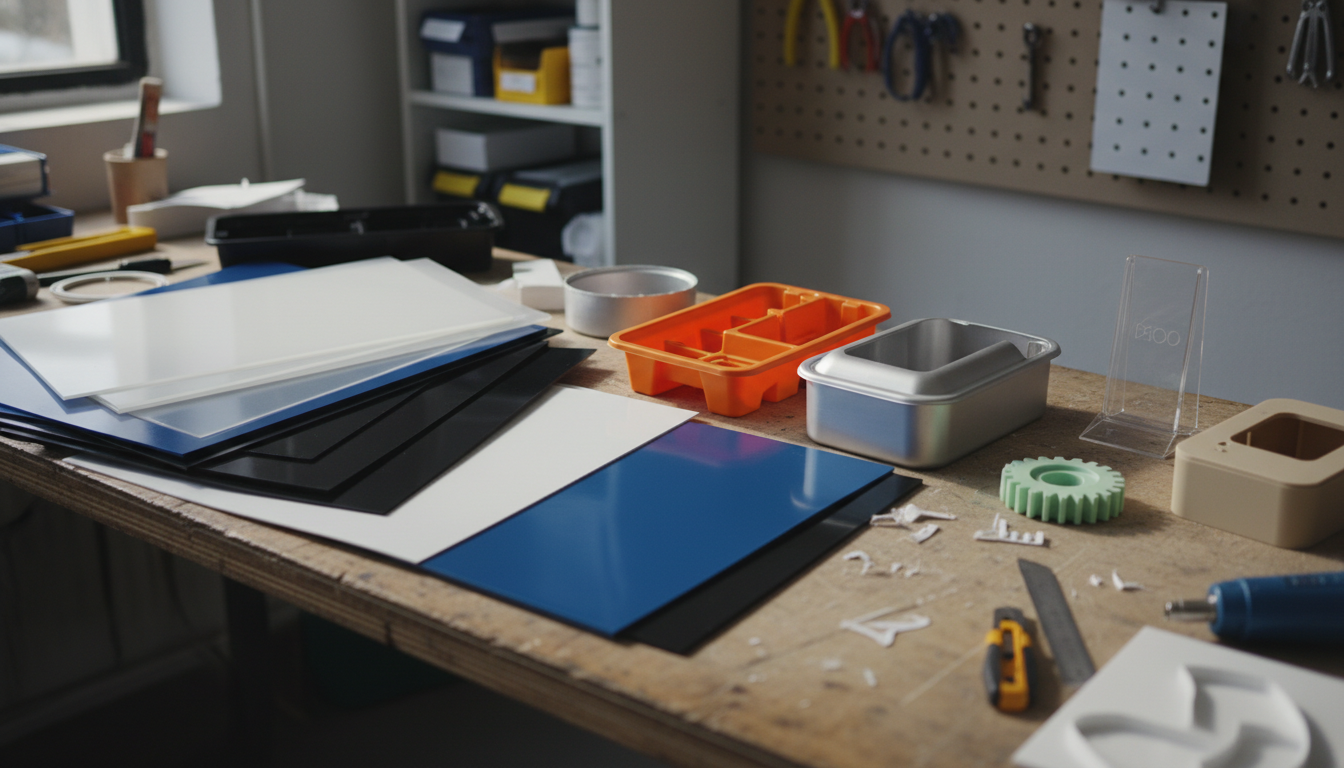
High impact polystyrene products have become a go-to choice for manufacturers across industries—from packaging and signage to automotive parts and medical devices. If you’re looking for a material that balances toughness, affordability, and ease of fabrication, you’ll want to understand what makes HIPS stand out.
We’ve worked with countless materials over the years, and HIPS consistently delivers when projects need impact resistance without breaking the budget. Let’s break down what you should know about these products and how they might fit your manufacturing needs.
What Makes HIPS Different
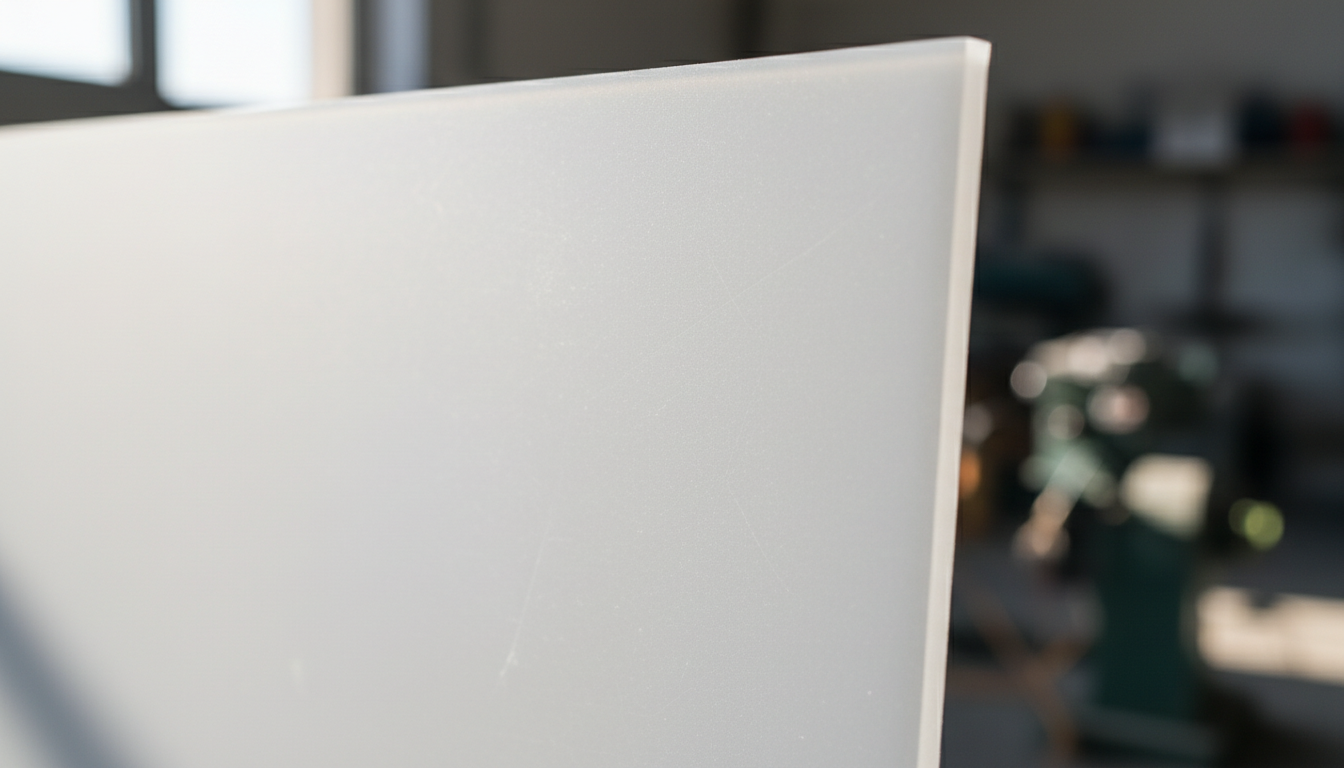
High impact polystyrene is an amorphous thermoplastic material used in lower heat applications, offering ease of processing, high impact strength, and stiffness. Unlike standard polystyrene, which can be brittle, HIPS typically contains around 5-10% rubber or butadiene copolymer added to the base material, increasing toughness and impact strength.
This modification changes everything. The rubber particles create a two-phase system that stops cracks from spreading and distributes stress more evenly. You get a material that’s rigid enough to hold its shape but tough enough to handle daily wear and tear.
The material is used in numerous daily-use products, such as bike helmets, car body parts, compact appliances, and much more. We’ve seen it perform well in everything from ABS applications to specialized uses where both strength and cost matter.
Common High Impact Polystyrene Products

The range of products made from HIPS is pretty impressive. HIPS plastic material is often used for countertop point of purchase displays and indoor signs where ease of fabrication is essential.
Here’s where you’ll typically find these products:
Packaging Solutions: HIPS is commonly used in the production of packaging materials such as clamshell containers, blister packs, and trays. The rigid nature makes it ideal for food packaging applications such as cookie and bakery trays or deli sandwich clamshells.
Retail and Display: HIPS is ideal for custom signage, kiosks, and display units due to its printable surface and clean appearance. The smooth surface accepts inks really well, making it perfect for branding.
Automotive Components: HIPS is used in manufacturing various automotive components such as interior trim parts, instrument panels, and exterior body parts due to its lightweight, impact-resistant, and easy-to-process properties.
Consumer Goods: HIPS is widely used in manufacturing consumer goods such as toys, household appliances, and office supplies. Think about PE products or PP products—HIPS often competes in similar applications.
Medical and Healthcare: HIPS plastic is used in temporary prosthetics and orthotic devices, especially in formulations like Orfitrans Stiff. HIPS is used in manufacturing medical devices and equipment such as diagnostic trays, sample cups, and packaging materials due to its resistance to chemicals and good dimensional stability.
Key Properties and Benefits
HIPS plastic offers excellent resistance to impact and cracking, making it ideal for high-traffic and high-stress environments. But that’s just the start.
Cost-Effectiveness: One of the most affordable thermoplastics available, HIPS plastic helps reduce overall project costs. HIPS plastic is relatively inexpensive compared to other engineering plastics, making it a cost-effective option for manufacturers.
Easy Processing: HIPS is easily sawed, sheared, punched, vacuum formed, and heat bent, and can be assembled using mechanical fasteners, solvents, or adhesives. This makes production faster and keeps labor costs down.
Printable Surface: The matte surface of high impact polystyrene plastic ensures excellent ink adhesion for screen printing and digital printing applications. Printable grades allow for decoration through various printing methods, including offset lithography, screen-printing, and digital printing.
Lightweight: HIPS material is significantly lighter than many other plastic alternatives, making it easier to handle and install. This cuts shipping costs and makes installation simpler.
FDA Compliance: HIPS sheet is available in FDA compliant grades. This opens up food-contact applications that many other plastics can’t handle.
Manufacturing Processes
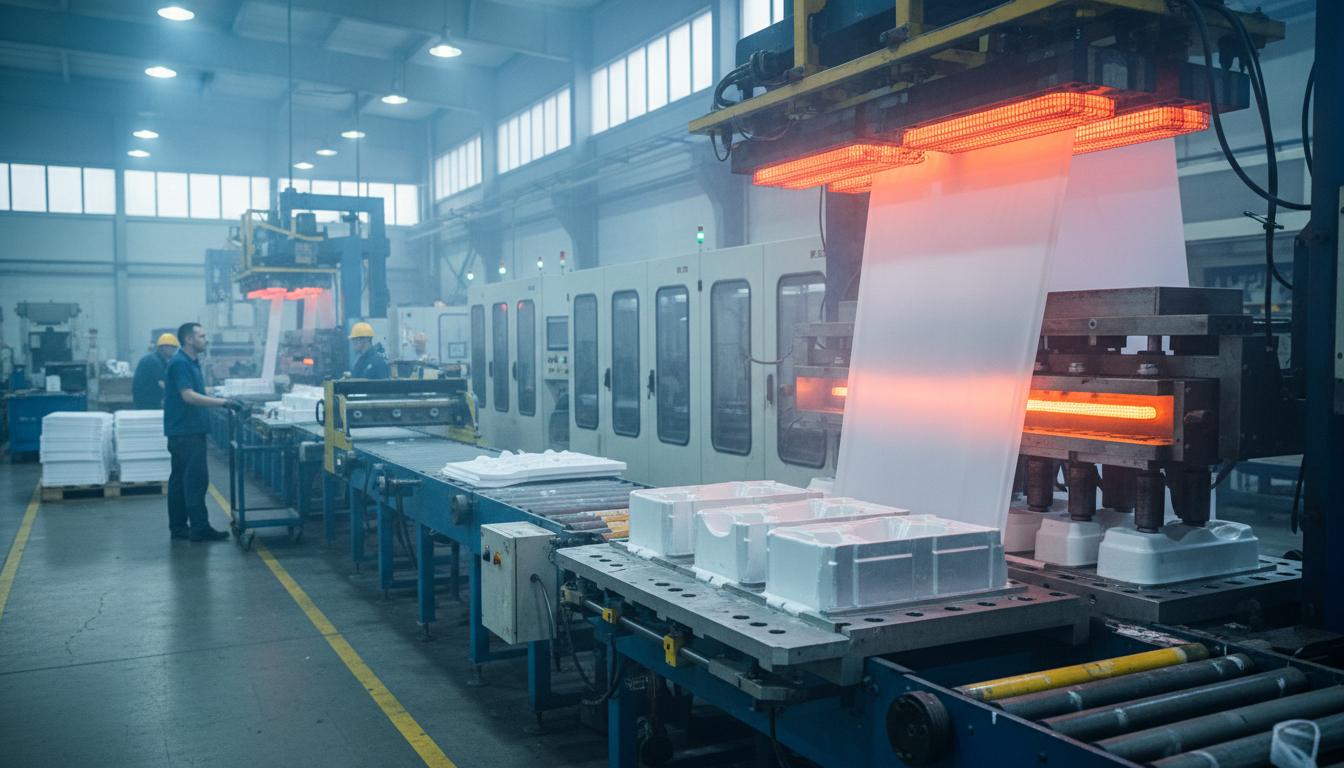
HIPS’s key advantage is its compatibility with methods such as injection molding and thermoforming, with its low melting point and predictable flow easing manufacturing workflows.
Thermoforming: Large sheets get heated and fitted over custom tools. Vacuum forming is used for large plastic pieces that don’t need high levels of detail or sharp corners or edges and is quick and affordable. You can also use pressure forming or twin sheet forming for more complex parts.
Injection Molding: HIPS injection molding is ideal for small plastic parts and products, especially those needed in large quantities, or parts that need high levels of detail or variable thickness. Tooling costs more upfront, but per-unit costs drop fast on high-volume runs.
Fabrication: It can be guillotine cut, die-cut, punched, and also painted and glued, properties that make it a popular option for machining pre-production prototypes.
For more information about our material options, check out our high impact polystyrene properties guide.
Limitations to Consider
Look, HIPS isn’t perfect for every application. HIPS has limited heat resistance and can deform or melt when exposed to high temperatures. This material can be used in low-heat food packaging applications but is not recommended for applications where the packaging will undergo heat higher than approximately 185°F.
HIPS plastic is not recommended for outdoor use since it is susceptible to degradation due to UV radiation. If you need outdoor durability, you’ll want to look at UV-resistant coatings or consider PET products or EVA alternatives.
HIPS is not suitable for high-stress applications or where high dimensional stability is required. For heavy-duty structural needs, you might need something stronger.
Sustainability and Recycling
HIPS is recyclable and can be reused in the manufacturing of new products, reducing waste and conserving resources. HIPS is fully recyclable, and the recycling process allows for minimal loss of its desirable properties, such as good dimensional stability and impact strength, meaning that recycled HIPS can be used in the production of new materials and products.
This matters more every year. Consumers care about sustainability, and being able to recycle HIPS products helps you meet those expectations while keeping costs reasonable.
How to Choose the Right Grade
Not all HIPS products are the same. We work with several HIPS compounds used in commercial and industrial applications, including flame retardant grades, antistatic, weathering resistant, food grade and others.
Match the grade to your specific needs:
- Food-grade for packaging applications
- Flame retardant for electronics housings
- Antistatic for electronic components
- Weather-resistant for semi-outdoor use
The right grade makes all the difference in performance and longevity.
Conclusion
High impact polystyrene products offer a practical balance of strength, workability, and cost that works across dozens of industries. From packaging trays to automotive trim, from retail displays to medical devices, HIPS delivers consistent performance at a price point that makes sense.
Yes, it has limitations—heat sensitivity and UV degradation mean it’s not right for every application. But for indoor uses, food packaging, signage, and consumer goods, HIPS often outperforms more expensive alternatives.
We’ve seen how versatile these products can be, and the material keeps finding new applications as manufacturing techniques improve. If you’re weighing material options for your next project, HIPS deserves a serious look. It might not be the flashiest choice, but it gets the job done reliably and affordably.
Visit our homepage to explore our full range of thermoplastic materials and find the right solution for your manufacturing needs.
Frequently Asked Questions
What is the difference between HIPS and standard polystyrene?
Polystyrene is a rigid, brittle thermoplastic, while high impact polystyrene is modified with rubber to enhance its toughness and impact resistance. HIPS is more suitable for applications such as signage, displays, and machine components, while polystyrene is used for disposable packaging, insulation, and rigid plastic products. The rubber modification gives HIPS 7 times the impact strength of standard polystyrene.
Can HIPS be used for food contact applications?
Yes, absolutely. Natural (translucent white) HIPS is FDA compliant for use in food processing applications. HIPS is commonly used for food trays, clamshell containers, and packaging where direct food contact occurs. Just make sure you’re using FDA-approved grades specifically designed for food applications.
Is HIPS suitable for outdoor products?
HIPS is not ideal for outdoor use, as it is vulnerable to degradation by UV light, moisture, and extreme temperatures, which can reduce its overall lifespan. For outdoor applications, you’ll need UV-resistant coatings or should consider alternative materials that offer better weather resistance. HIPS works best for indoor or semi-protected environments.
How does HIPS compare to ABS plastic?
Both HIPS and ABS are known for their strength and durability, but ABS offers better resistance to high temperatures and chemicals. However, HIPS is generally more cost-effective, making it a better choice for projects where cost is a significant concern. HIPS is easier to print on and thermoform, while ABS handles heat and stress better. Your choice depends on the specific requirements of your project.
What temperature range can HIPS withstand?
The melting point of high-impact polystyrene is approximately 240°C, which limits its use in environments with sustained high temperatures, but it remains suitable for applications that demand rigidity and impact resistance without exposure to extreme heat. For continuous use, keep HIPS below 185°F (85°C) to maintain its structural integrity and dimensional stability.